



Wiesmann was a tiny household operation out of Dülmen, Germany — based by brothers Martin and Friedhelm Wiesmann in 1985, began as a hardtop producer, and solely step by step labored their means into constructing full vehicles. By the point they bought to the MF5 in 2008, they’d spent years perfecting a easy, nearly philosophical concept: take one of the best BMW M engines, strip away all the pieces pointless, and wrap them in a physique that appears like a Nineteen Fifties Le Mans racer. Their emblem is a gecko, their manufacturing facility roof in Dülmen has a large gecko constructed into it, and their said mission was to construct a automobile that “sticks to the street like a gecko to a wall.” It appears like advertising and marketing, however within the MF5 they really delivered on it.
The GT MF5 was their final expression of that concept. BMW’s S85 — the 5.0L naturally-aspirated V10 from the E60 M5 and E63 M6, revving to eight,250 rpm and sounding genuinely like an F1 automobile — went right into a bespoke aluminum monocoque chassis with fiberglass bodywork. The outcome weighed simply 1,395 kg, roughly 400 kg lower than the M5 that donated the engine. Within the M5 and M6, the S85 was all the time considerably muffled by the mass and luxurious of these vehicles.
Lose 400 kg and the S85 stops being a luxurious merchandise. The throttle sharpens, the exhaust stops feeling filtered, and the climb to eight,250 rpm is one thing you brace for. Highway testers saved reaching for the phrase “violent” — which, from automotive journalists, is mainly a five-star evaluate.
Spectacular Efficiency and Very Uncommon
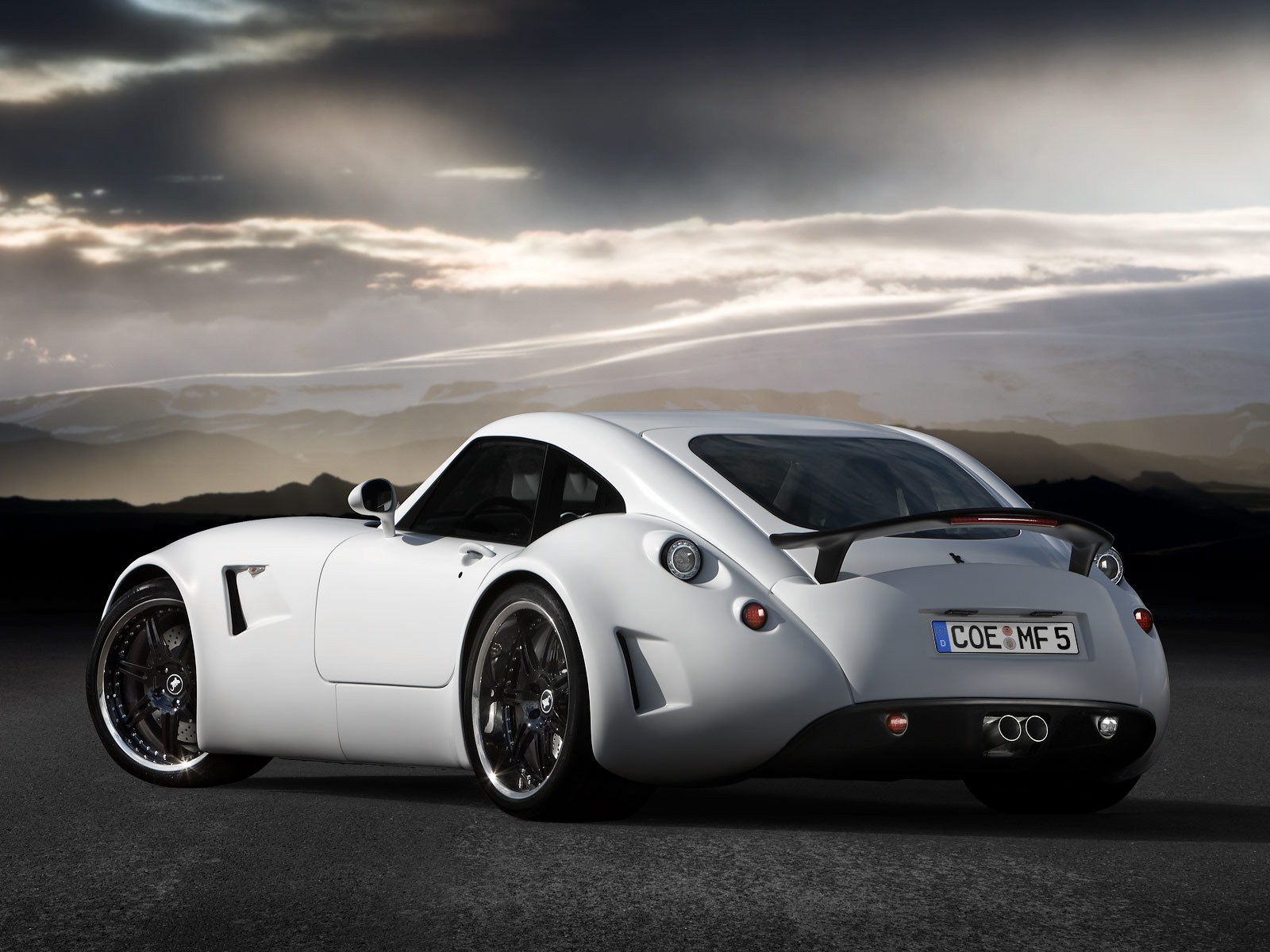
0–62 mph in 3.9 seconds, 192 mph prime pace, 363 hp per ton. For context, that power-to-weight ratio beats the E60 M5 by a large margin — and the 0–60 time was 0.6 seconds faster than the M5 regardless of utilizing the equivalent engine. That’s the entire level in a single statistic. Inside, the cabin was completely handmade: deeply bolstered sports activities seats, a minimal instrument cluster forward of the motive force, no fussy infotainment. For €179,000 in 2009, it was both charming or confronting relying in your expectations — nevertheless it was sincere.
Fewer than 200 MF5s had been in-built complete throughout coupe and roadster. The V10 roadster particularly — the purest, most uncovered model — was capped at 55 models and solely 43 had been really accomplished. The coupe V10 ran to round 56 vehicles earlier than manufacturing switched to the twin-turbo V8. You’re speaking a couple of automobile the place the full inhabitants of essentially the most fascinating variant suits on a single ground of a parking storage.
However Why Did It Fail?
Timing was brutal. Wiesmann introduced the MF5 at Geneva 2008 and launched it proper into the enamel of the worldwide monetary disaster. The brothers had additionally simply expanded their manufacturing facility — worst doable second. By 2013, the corporate was bankrupt. The model was ultimately picked up by Contec International in 2016 and has been reviving ever since, most visibly with Challenge Thunderball — a completely electrical roadster revealed in 2022 with 671 hp, 0–62 in 2.9 seconds, and a €300,000 price ticket. It offered out its whole first 12 months of manufacturing earlier than a single automobile was delivered, which tells you all the pieces concerning the demand that was all the time there.
What makes the MF5 notably fascinating as a narrative is that it was doing in 2008 what boutique producers are celebrated for at this time — hand-built, ultra-lightweight, driver-focused, visually distinctive — however the market wasn’t prepared for a €179,000 area of interest German coupe at that actual second in historical past. Had it launched 5 years later, it might in all probability have been a sensation. Used examples now commerce between roughly $250K–$370K, they usually’re genuinely onerous to seek out.
[Photos: wiesmann.com]
