



Comply with us at the moment…


The automotive trade is at the moment witnessing a pivot that rivals the shift from horses to inner combustion. For many years, the “van” was a static instrument: you got a cargo van for packing containers or a passenger van for individuals. If your corporation wants modified, you traded the automobile. At CES 2026, Kia has successfully declared that period over. With the formal showcase of the production-ready PV5 and PV7, Kia is transferring past the idea of a automotive as a product and towards the automobile as a versatile, software-defined platform.
The Kia PBV (Platform Past Automobile) initiative is not only about one other electrical van; it’s a few radical rethinking of asset utilization. By using a “Skateboard” EV chassis mixed with a mechanical and electromagnetic coupling system, Kia permits house owners to swap the “life modules”—the higher physique of the automobile—on the fly. This modularity is the trade’s most direct reply to the unstable calls for of the fashionable gig financial system.
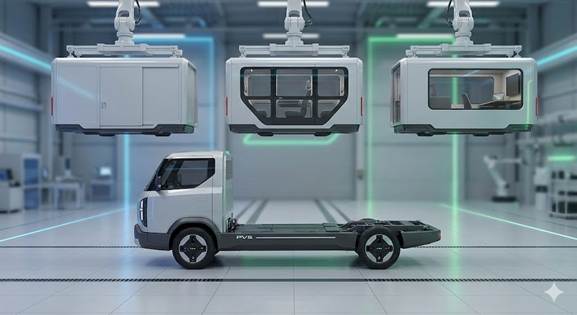
The Swiss Military Knife of the Gig Economic system
The timing of Kia’s entry into this house is surgical. We’re at the moment seeing a large convergence of the supply and ride-hailing markets. Corporations that when solely moved individuals at the moment are transferring parcels, and vice versa. Nevertheless, a driver in an Uber atmosphere typically finds their automobile ill-equipped for heavy-duty grocery or package deal supply, whereas conventional supply vans lack the consolation or configuration for premium ride-sharing.
Kia’s answer addresses the “empty mile” and “idle time” issues that plague fleet house owners. A single PV5 chassis can work a morning shift as a high-capacity commuter shuttle, swap its module at a localized hub in ten minutes, and spend the afternoon as a high-volume supply automobile for Amazon or UPS. This functionality dramatically lowers the Whole Price of Possession (TCO) as a result of a single automobile can now carry out the work that beforehand required two distinct capital investments.
The Aggressive Panorama: Specialization vs. Modularity
Kia is not the one participant eying the business throne, however their technique is exclusive. Most opponents are doubling down on Fastened-Function Electrification.
- Ford Professional: The Ford E-Transit is the present gold customary for conventional fleets. It presents unimaginable reliability and built-in software program for fleet administration. Nevertheless, it stays a “mounted” automobile. In case you purchase a high-roof cargo E-Transit, it’ll by no means be a snug 12-passenger shuttle.
- Rivian: The Rivian EDV (Electrical Supply Van) was designed from the bottom up for last-mile supply. It’s a masterpiece of ergonomics for drivers, however it’s extremely specialised. It’s a scalpel, whereas Kia’s PBV is a multi-tool.
- BrightDrop (GM): Normal Motors’ BrightDrop has efficiently focused the large logistics gamers with their Zevo vans. Their focus is on the ecosystem—utilizing electrified containers (e-carts) to maneuver items from the van to the door.
The place Kia differentiates itself is in adaptability. Whereas Ford and GM are promoting “the perfect van,” Kia is promoting a “variable atmosphere.” For small to medium-sized companies that can’t afford to take care of specialised fleets, the flexibility to have one chassis that modifications with the day’s work schedule is a aggressive benefit that present choices from Detroit or Stuttgart can not match.
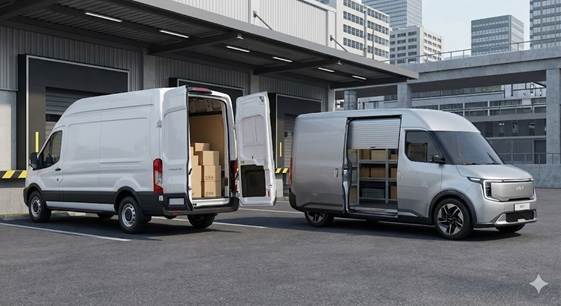
Future Choices: The Rise of Function-Constructed Areas
The PV5 and PV7 are only the start. As this modular ecosystem matures, we are able to anticipate “Life Modules” that focus on rising alternatives that we at the moment do not even categorize as “automotive.”
- Cellular Retail and “Pop-up” Shops: Think about a module that may be a totally branded clothes boutique or a high-end espresso bar. Retailers may lease modules reasonably than storefronts, transferring their “store” to the place the foot visitors relies on real-time knowledge.
- Cellular Medical Clinics: With the growing older inhabitants, the “physician involves you” mannequin is returning. A modular PBV could possibly be outfitted as a cellular diagnostic suite, geared up with moveable X-ray or dialysis machines, touring between residential neighborhoods.
- The Private Digital Twin/Workplace: As distant work evolves, the “Workplace” module may turn into a private sanctuary. Knowledgeable may have their workplace module parked at residence, then merely have a chassis choose it up and transport them to a gathering whereas they proceed to work in a well-known, optimized atmosphere.

The Strategic Shift: Forcing the Hand of Tech Suppliers
Very like IBM as soon as dictated the requirements for the computing trade, Kia is positioning itself to dictate the requirements for the “modular” period. By creating a sturdy, open-standard interface for these modules, they’re inviting third-party builders to create specialised our bodies. This “platform-first” strategy ensures that Kia stays on the heart of the worth chain, at the same time as the precise duties of the autos evolve.
Moreover, the combination of AI in these platforms permits the automobile to advocate configuration modifications. If the AI detects a 40% spike in ride-sharing demand in a selected zip code, it might probably alert the fleet supervisor to swap cargo modules for passenger modules to maximise income. This isn’t only a van; it’s a cellular, profit-optimizing robotic.
Wrapping Up
Kia’s PBV technique, led by the PV5 and PV7, represents a basic shift from “shopping for a automotive” to “deploying an answer.” By fixing the issue of asset utilization by fast modularity, Kia has leapfrogged the normal business gamers who’re nonetheless targeted on static electrification. Because the supply and ride-sharing markets proceed to blow up, the flexibility to reconfigure a automobile on the fly will transfer from being a “cool function” to a survival requirement for contemporary companies. Kia is not simply constructing vans; they’re constructing the versatile material of future city logistics.
Disclosure: Photos rendered by Nano Banana Professional
Rob Enderle is a expertise analyst at Torque Information who covers automotive expertise and battery developments. You may be taught extra about Rob on Wikipedia and observe his articles on Forbes, X, and LinkedIn.
Comply with us at the moment…
