



At present marks a historic turning level in automotive historical past. As of January 1, 2026, the ALPINA model has formally transferred to BMW Group possession, ending 61 years of unbiased operation by the Bovensiepen household. What started in 1965 as a small tuning home in Buchloe, Germany—initially targeted on carburetors and cylinder heads—advanced into one of many world’s most revered automotive producers, acknowledged by the German Federal Motor Transport Authority as a standalone carmaker since 1983.
BMW acquired ALPINA in March 2022, however honored a multi-year transition settlement that allowed the model to function independently by the top of 2025. Now, as ALPINA transforms into BMW ALPINA—a standalone luxurious efficiency model inside the BMW Group alongside M, MINI, and Rolls-Royce—it’s the right second to have a good time the legendary machines that outlined ALPINA’s unbiased period.
These weren’t simply tuned BMWs. ALPINA vehicles carried their very own VINs, their very own guarantee, and their very own philosophy: to not make BMWs quicker, however to make them totally different—extra refined, extra unique, and sometimes extra suited to real-world driving than their M Division counterparts.
Listed here are the 5 most iconic ALPINA vehicles ever made.
1. ALPINA B10 Bi-Turbo (E34): The World’s Quickest Sedan
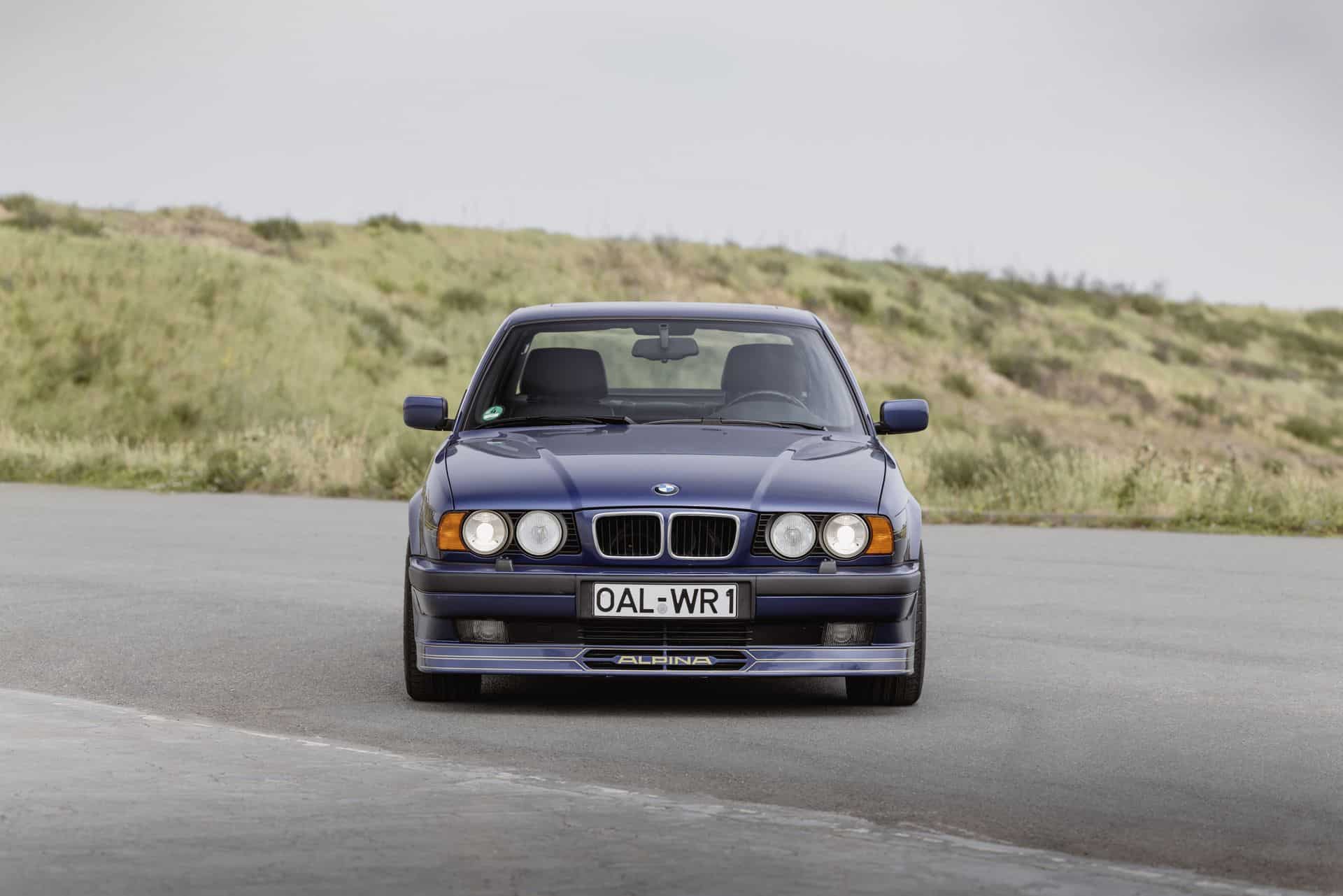
1989-1994 | 507 Items Produced
If there’s one automotive that defines ALPINA’s engineering genius, it’s the B10 Bi-Turbo. When it debuted on the 1989 Geneva Motor Present, it claimed a title that despatched shockwaves by the automotive world: the quickest manufacturing sedan on earth.
Primarily based on the BMW 535i, ALPINA invested a big sum of money to make it what many referred to as “one of the best 4-door on this planet.” The transformation was complete: ALPINA fully dismantled the M30 inline-six, put in cast Mahle pistons, added twin Garrett T25 water-cooled turbochargers, and fitted a Bosch variable increase management system adjustable from the motive force’s seat between 0.4 and 0.8 bar.
The outcome? 360 horsepower at 6,000 rpm and 520 Nm of torque—figures that propelled the B10 Bi-Turbo from 0-100 km/h in simply 5.6 seconds and on to a prime pace exceeding 290 km/h (180 mph). To place that in perspective, it was as quick as a Ferrari Testarossa in a straight line. In a memorable check by German journal Sport Auto, the B10 really beat the Italian supercar off the road, reaching 100 km/h half a second faster.
However the B10 Bi-Turbo wasn’t nearly uncooked pace. It featured upgraded Bilstein suspension, automated load-leveling on the rear to forestall extreme camber above 170 mph, a specifically developed Getrag 5-speed guide transmission, and a 25-percent limited-slip differential. Inside, Recaro sport seats in ALPINA material, a leather-wrapped Momo steering wheel, and polished wooden trim created an environment of understated luxurious that no M5 might match.
Regardless of costing almost twice the value of an E34 M5 at 146,800 DM, the B10 Bi-Turbo grew to become ALPINA’s best-selling mannequin as much as that time. Manufacturing led to August 1994 when BMW discontinued the M30 engine; the ultimate 50 M30 blocks have been reserved solely for ALPINA to finish the manufacturing run.
At present, the B10 Bi-Turbo is broadly thought-about ALPINA’s masterpiece—a automotive that proved a small unbiased producer might embarrass supercars whereas providing four-door practicality and BMW reliability.
2. ALPINA B7 Turbo Coupé (E24): The Autobahn Missile
1979-1987 | Much less Than 300 Items Produced
If the E24 6 Collection is without doubt one of the most stunning BMWs ever designed, the ALPINA B7 Turbo Coupé is its final expression. Primarily based on the BMW 635CSi, the B7 Turbo represented ALPINA’s mastery of turbocharged efficiency wrapped in timeless gran turismo styling.
ALPINA took BMW’s 3.0-liter inline-six and enlarged it to three.4 liters, then added a fastidiously engineered turbocharger system with variable increase management. In contrast to many turbo vehicles of the period, the B7 featured refined Bosch increase administration that allowed the motive force to regulate turbo stress between 0.6 and 0.9 bar through a dial within the cabin—a characteristic that was exceedingly uncommon within the late Nineteen Seventies and early Eighties.
Later variations of the B7 Turbo Coupé produced 325-330 hp at 5,800 rpm with 378 lb-ft of torque accessible from simply 3,000 rpm. That was sufficient for a 0-62 mph time of 5.9 seconds and a prime pace of 166 mph—supercar territory for the period. The engine featured Mahle pistons, a remapped gasoline injection system, efficiency camshafts, and a customized exhaust.
To deal with the facility, ALPINA fitted Bilstein gas-pressure dampers with progressive springs, ventilated disc brakes throughout, and 16-inch wheels with staggered tire sizes (205/55 entrance, 225/50 rear). Inside, hand-stitched leather-based, customized gauges, ALPINA sport seats, and delicate wooden trim created an ambiance that was pure grand tourer.
Manufacturing numbers are unclear, however fewer than 300 B7 Turbo Coupés have been constructed throughout all variations, making it considered one of ALPINA’s rarest fashions. The mix of the shark-nosed E24’s elegant proportions with ALPINA’s refined turbo know-how created what many take into account the last word Eighties autobahn cruiser—a automotive that might dispatch the journey from Munich to Hamburg at speeds most fashionable vehicles can solely dream of.
Values have skyrocketed in recent times as collectors acknowledge the B7 Turbo Coupé as the head of analog turbocharged efficiency.
3. ALPINA Roadster V8 (Z8): Reimagining an Icon

2003 | 555 Items Produced
When BMW’s Z8 manufacturing led to 2002, ALPINA noticed a chance to create one thing fully totally different. The unique Z8 was a sharp-edged sports activities automotive—stunning however considerably uncompromising, with a 400-hp S62 V8, a 6-speed guide, and run-flat tires that transmitted each imperfection within the street on to the motive force.
ALPINA’s strategy was radical: make it slower, make it smoother, and make it higher. Out went the S62 engine in favor of ALPINA’s personal 4.8-liter V8 from the B10 V8 S, producing 375 hp and 383 lb-ft of torque—19 fewer horses however 15 extra lb-ft than the usual Z8. Extra importantly, that torque arrived at considerably decrease RPM, making a long-legged, easy character excellent for cruising the Riviera.
The 6-speed guide was changed with a 5-speed automated that includes ALPINA’s Change-Tronic steering wheel-mounted shift buttons. The suspension was softened, the tough run-flat tires have been ditched in favor of standard rubber with taller sidewalls, and people tires have been mounted on beautiful 20-inch ALPINA wheels (9 inches entrance, 10 inches rear) that gave the automotive a extra purposeful stance.

Inside, ALPINA reupholstered every thing in ultra-soft Nappa leather-based, fitted customized gauges with ALPINA’s signature blue background, and added delicate badging. A numbered plaque between the seats reminded every proprietor they’d considered one of simply 555 examples.
Right here’s the fascinating half: BMW bought the ALPINA Roadster V8 by its personal U.S. dealerships—marking the primary time an ALPINA was formally accessible in America. Of the 555 vehicles constructed, 450 got here to the USA, with solely 105 remaining in Europe.
At $140,000 when new—$12,000 greater than an ordinary Z8—the ALPINA Roadster V8 was the costliest automotive bought at BMW dealerships on the time. Critics initially questioned the idea of a “slower” Z8, however ALPINA understood one thing essential: not each sports activities automotive must be a monitor weapon. Typically, essentially the most refined strategy is to prioritize composure over aggression.
At present, ALPINA Roadster V8s command $150,000-$250,000 at public sale—usually greater than customary Z8s—as collectors acknowledge that ALPINA efficiently remodeled BMW’s targeted roadster right into a world-class grand tourer.
4. ALPINA B12 6.0 (E38): The Pinnacle of Luxurious
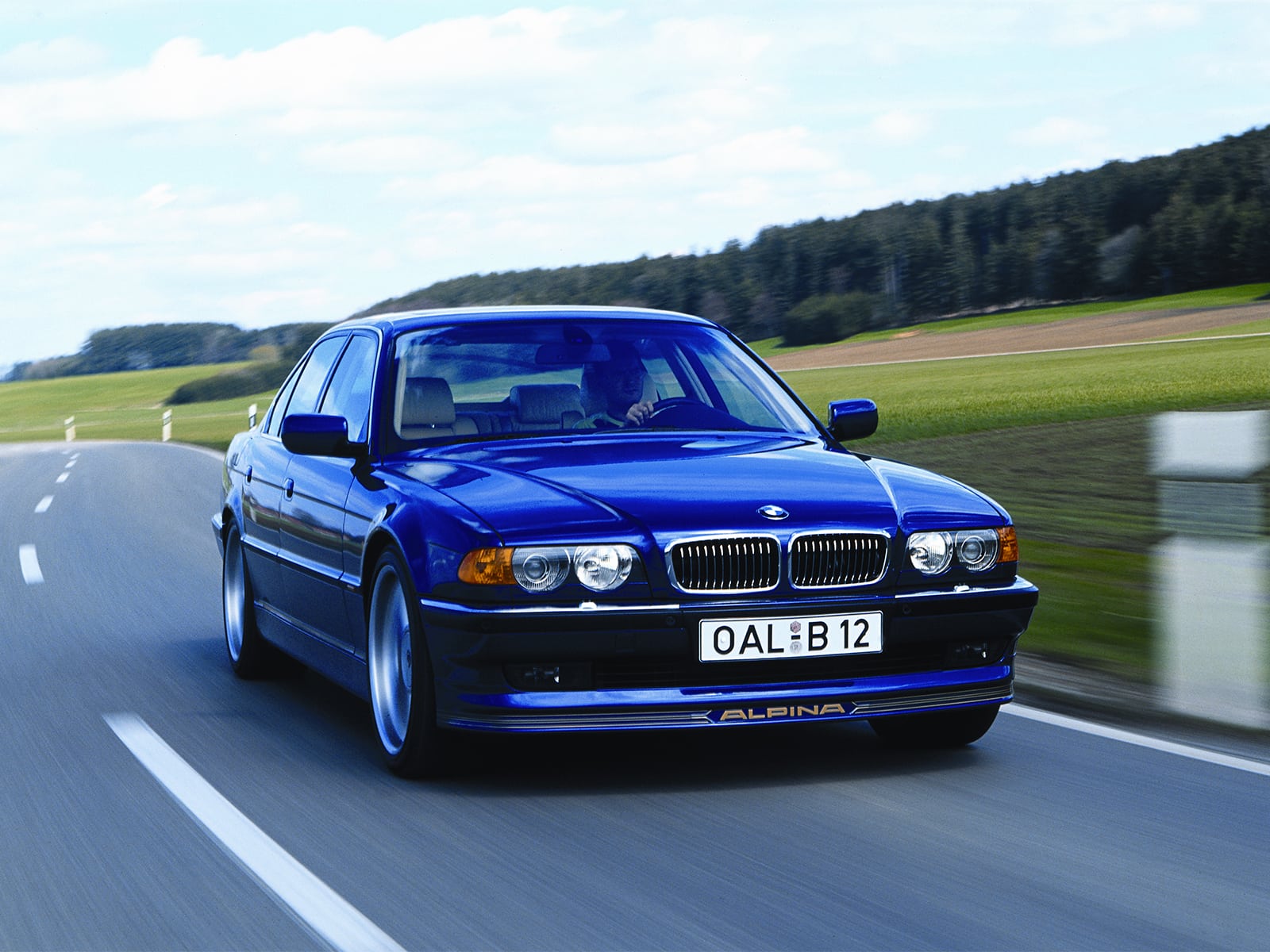
1999-2001 | 94 Items Produced
Within the late Nineties, in case you needed the last word luxurious sedan, you had two selections: a Mercedes-Benz S-Class or an ALPINA B12 6.0. For these within the know, the ALPINA was the one alternative.
Primarily based on BMW’s E38 7 Collection, the B12 6.0 featured the largest-capacity naturally aspirated engine ALPINA ever tuned: a 6.0-liter model of BMW’s M73 V12. ALPINA’s modifications included Mahle aluminum pistons, modified camshafts, redesigned air intakes, and a customized exhaust system that raised output to 424 hp and 442 lb-ft of torque.
Which may not sound like supercar numbers by fashionable requirements, however in 1999, it was extraordinary for a luxurious sedan. The B12 6.0 might dash from 0-60 mph in below six seconds regardless of weighing as a lot as a small home, and it will proceed accelerating all the best way to an electronically restricted 181 mph.
The facility was delivered by a 5-speed ZF automated gearbox that includes ALPINA’s progressive Change-Tronic system—one of many first implementations of steering wheel-mounted shift buttons, years earlier than paddle shifters grew to become commonplace.
However the B12 6.0 was by no means about numbers. It was about the way it delivered its efficiency. The V12 was preternaturally clean, with a wave of torque accessible from simply above idle. The suspension was tuned for magic carpet consolation, but the automotive remained composed at autobahn speeds. Inside, hand-selected Lavalina leather-based, polished wooden trim, ALPINA gauges, and signature multi-spoke wheels created an environment of bespoke luxurious that rivaled Bentley.
Solely 94 B12 6.0s have been constructed throughout the mannequin’s temporary two-year manufacturing run, making it considered one of ALPINA’s most unique creations. It represented every thing ALPINA stood for: understated class, easy efficiency, and the sort of consideration to element that solely a small-volume producer might present.
In an period when Mercedes dominated the luxurious sedan phase, the B12 6.0 proved that ALPINA might create one thing much more particular.
5. ALPINA B6 3.5S (E30): The Final 3 Collection

1987-1990 | 62 Items Produced
When BMW launched the E30 M3 in 1986, it grew to become an immediate legend—a homologation particular designed to dominate touring automotive racing, with a high-revving 2.3-liter four-cylinder that screamed to 7,000 rpm. However ALPINA noticed a chance to create one thing totally different: an E30 M3 for individuals who valued torque over revs, consolation over monitor occasions, and exclusivity over every thing.
The B6 3.5S used the M3’s light-weight physique, wider fenders, and improved aerodynamics, however below the hood sat ALPINA’s personal 3.5-liter inline-six—the identical fundamental engine present in bigger BMWs, however closely modified with ALPINA’s experience. Output was 254 hp and 255 lb-ft of torque—about 19 extra horsepower than even essentially the most highly effective model of the M3’s S14 engine, and vastly extra torque accessible throughout a much wider rev vary.
The distinction in character was night time and day. The place the M3’s four-cylinder demanded to be revved, the B6 3.5S delivered clean, linear energy from 2,000 rpm. The place the M3’s suspension was track-focused and agency, ALPINA’s setup (shared with the M3 however retuned) provided higher trip high quality with out sacrificing dealing with precision. Inside, ALPINA’s signature wooden trim, leather-based upholstery, and customized gauges elevated the cabin past the M3’s extra spartan strategy.
Solely 62 B6 3.5S fashions have been constructed, making it one of many rarest ALPINAs ever produced. At present, discovering one on the market is almost not possible, and after they do seem, costs strategy €300,000—almost triple what a comparable E30 M3 instructions.
The B6 3.5S represented ALPINA’s philosophy in its purest kind: take an already glorious BMW, make it extra refined and extra unique, and create one thing that appeals to a totally totally different clientele. It wasn’t attempting to beat the M3 on monitor; it was providing another for drivers who needed the M3’s appears with a extra refined driving expertise.
A Legacy Secured
These 5 vehicles—the B10 Bi-Turbo, B7 Turbo Coupé, Roadster V8, B12 6.0, and B6 3.5S—symbolize the head of ALPINA’s unbiased period. They show {that a} small producer with the suitable philosophy might create vehicles that competed with (and sometimes surpassed) choices from a lot bigger opponents. That’s what ALPINA has all the time been about. And as BMW ALPINA writes its subsequent chapter, we hope that spirit endures.
What’s your favourite ALPINA mannequin from the unbiased period? Share your recollections within the feedback beneath.
